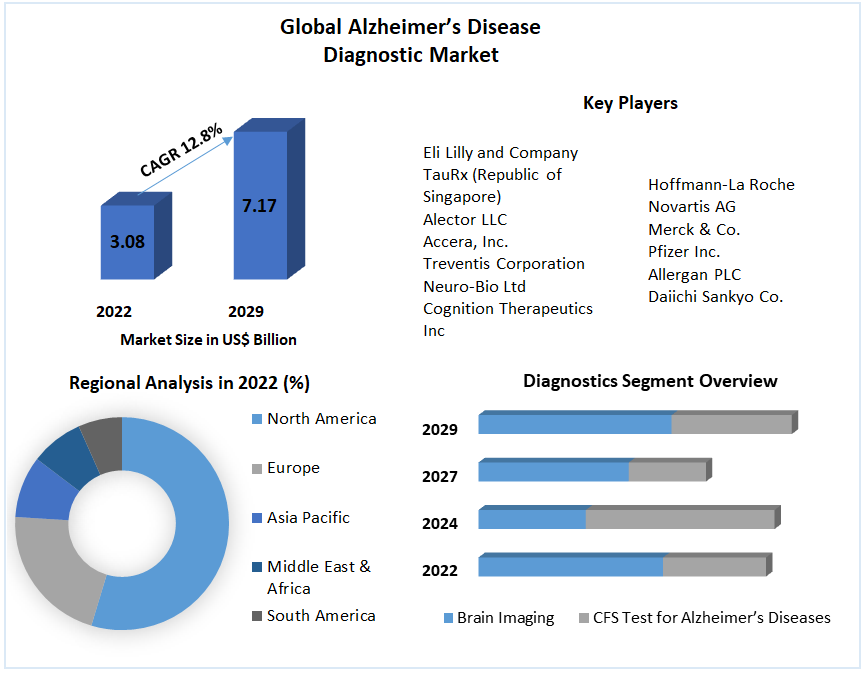
The Alzheimer’s Disease Diagnostic Market is evolving rapidly as new diagnostic techniques and technologies improve the efficiency of disease detection. Increasing awareness about neurological health has encouraged individuals to undergo regular cognitive assessments, especially among aging populations. Early diagnosis is becoming a priority for healthcare providers because it allows patients to receive appropriate treatment and support services at an early stage. Diagnostic centers are adopting advanced imaging systems and laboratory tests that provide accurate results within shorter time periods. These improvements have increased patient confidence in diagnostic procedures and encouraged more individuals to seek medical evaluation. Healthcare professionals are also focusing on educating patients and caregivers about the importance of early diagnosis and disease management. As awareness increases, the demand for advanced diagnostic solutions continues to grow steadily across different regions.
Industry specialists analyzing Alzheimer’s Disease Diagnostic Market Trends highlight the growing role of digital healthcare technologies in improving diagnostic accessibility. Telemedicine platforms and remote monitoring tools allow physicians to evaluate cognitive health without requiring frequent hospital visits. Artificial intelligence is also being integrated into diagnostic systems to improve accuracy and assist healthcare professionals in identifying early signs of cognitive decline. Increasing collaboration between research institutions and healthcare providers is leading to the development of improved diagnostic tools. Rising healthcare investments and government initiatives are supporting the adoption of advanced technologies. These developments are expected to support steady industry growth and improve the overall quality of Alzheimer’s disease diagnosis in the coming years.
FAQ
Q1: What trends influence the market?
A1: Technology and digital healthcare trends influence the market.
Q2: Why is early diagnosis important?
A2: Early diagnosis improves treatment planning.
Q3: What technologies support diagnosis?
A3: Imaging systems and AI tools support diagnosis.